
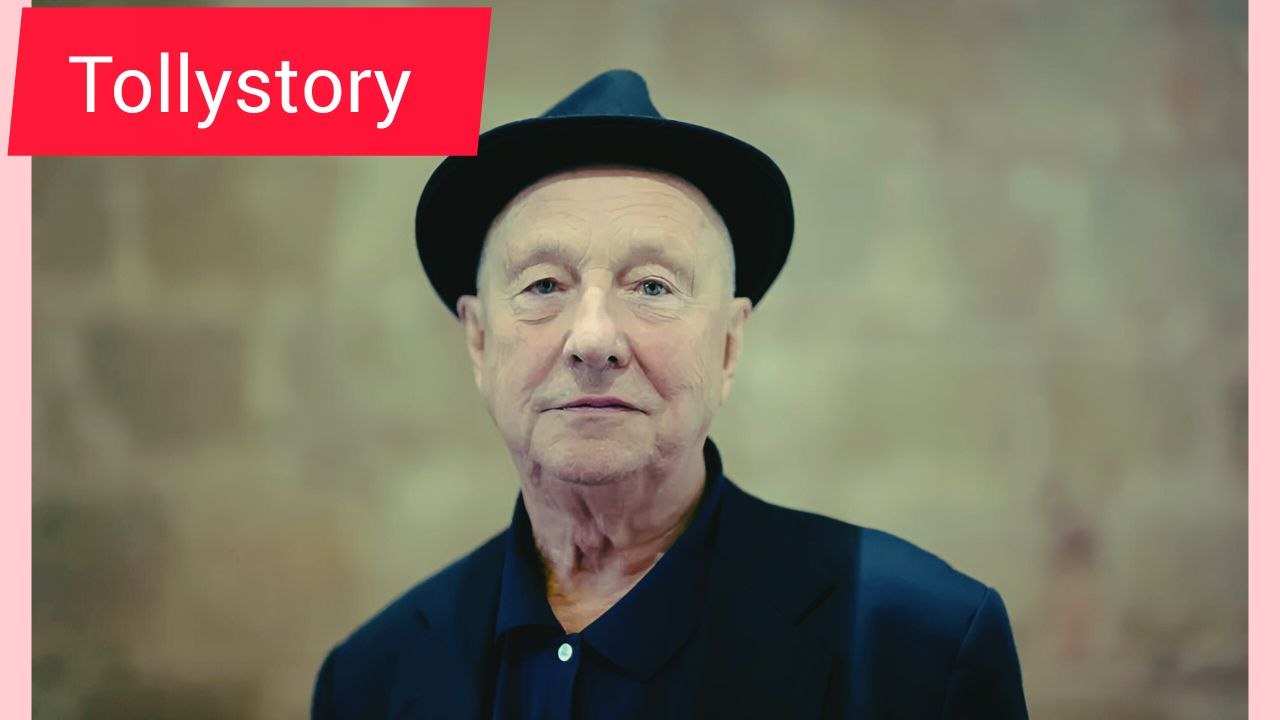
Early Life and Background Georg Baselitz
Georg Baselitz is born as Hans-Georg Kern on January 23, 1938, in Deutschbaselitz, a small village in Saxony, Germany. this early years opened up in the shadow of World War II and its aftermath, a reality that might deeply shapes his worldview and inventive route. Growing up in a destroyed and divided Germany wasn’t only a backdrop—it became an emotional and mental surroundings that seeped into his innovative DNA. Imagine being a baby surrounded by using ruins, wherein silence regularly replaced laughter, and the past lingered heavily in every communication. That was Baselitz’s fact, and it left an indelible mark on his art.His father became a schoolteacher, and his family lived in a college building, which had formerly been used as a Nazi headquarters. This eerie setting uncovered him to layers of history at a very young age. The contrast between education and oppression, between rebuilding and remembering, created a duality that later became seen in his fragmented and inverted imagery. Baselitz didn’t just examine the world around him—he absorbed its tensions, contradictions, and unresolved trauma.As Germany cut up into East and West, Baselitz grew up in East Germany under a socialist regime. Artistic expression there was heavily regulated, favoring socialist realism over experimentation. But Baselitz changed into by no means one to conform. Even as a younger scholar, he resisted the idea that artwork ought to serve political propaganda. Instead, he leaned towards raw expression, some thing deeply personal and frequently unsettling. This resistance might finally outline his profession.
Georg Baselitz Education and Artistic Influences
Georg Baselitz’s formal creative adventure started in East Berlin, where he enrolled on the Academy of Fine and Applied Art in 1956. At first glance, this appeared like an appropriate region to nurture his growing hobby in painting, but it didn’t take lengthy for matters to head sideways. The academy adhered strictly to socialist realism, a style that prioritized idealized depictions of workers and state-accepted narratives. Baselitz, however, became already growing a rebellious streak. He wasn’t inquisitive about painting propaganda-friendly pics; he wanted to explore some thing raw, unsettling, and deeply personal. That friction led to his expulsion after simply semesters—a moment that could have crushed a less determined artist however rather became a turning point.After being brushed off, Baselitz moved to West Berlin in 1957, wherein the creative climate was far extra open and experimental. He persisted his studies on the Hochschule der Künste (University of the Arts), and this shift in surroundings uncovered him to a broader variety of impacts. Suddenly, he wasn’t restrained to a single ideology. He encountered Expressionism, Abstract Art, or even elements of Surrealism, all of which contributed to shaping his specific voice. Artists like Edvard Munch, Ernst Ludwig Kirchner, and Willem de Kooning left a lasting impression on him. You can almost sense their echoes in his ambitious brushstrokes and emotionally charged compositions.But Baselitz didn’t just imitate his impacts—he challenged them. He took the emotional intensity of German Expressionism and pushed it further, stripping away refinement in prefer of some thing more primal. His paintings commenced to mirror a anxiety between subculture and revolt, among structure and chaos.
Adoption of the Name Georg Baselitz
At some factor, every artist faces the question of identification—now not just who they are, but how they want to be seen. For Hans-Georg Kern, the answer came inside the shape of a call exchange. In 1961, he followed the call Georg Baselitz, inspired by means of his place of origin of Deutschbaselitz. On the floor, it’d look like a simple gesture, but it carried deeper importance. This wasn’t pretty much rebranding; it turned into about reclaiming control over his narrative.Why might an artist pick to rename himself after a small village? In Baselitz’s case, it was each private and symbolic. The name related him to his roots, grounding him in a specific area and records. At the same time, it allowed him to distance himself from his beyond identity and the expectations that came with it. It’s nearly like he become pronouncing, “I decide who I am, not the machine I changed into born into.This act of self-reinvention mirrored the themes that could later seem in his work. Just as he fragmented and reassembled human figures on canvas, he reconstructed his own identity in actual existence. The call “Baselitz” became synonymous with inventive defiance, a rejection of conformity, and a willingness to challenge norms.There’s additionally some thing strategic approximately it. In the artwork international, a unique name can make a difference, helping an artist stand out in a crowded discipline. But for Baselitz, it wasn’t just about recognition—it turned into about transformation. The new name marked the beginning of a new bankruptcy, one in which he would push obstacles and initiate reactions.
Early Struggles and Controversies Georg Baselitz
If there’s one component that described Georg Baselitz’s early career, it’s controversy. From the very starting, his work sparked sturdy reactions—frequently terrible—and positioned him at odds with each critics and government. But rather than backing down, he leaned into the anxiety, using it as gas for his artistic evolution.In the early 1960s, Baselitz began generating artwork that were deliberately provocative. One of his maximum infamous works, “Die große Nacht im Eimer” (The Big Night Down the Drain), precipitated a scandal whilst it become first exhibited in 1963. The portray featured a distorted, nearly ugly parent in a crude and unsettling pose. Authorities deemed it obscene, and the painting changed into confiscated with the aid of the police. Imagine being a young artist and having your work seized—it’s the sort of second that might derail a career. For Baselitz, it did the opposite.This incident catapulted him into the highlight, albeit now not within the most flattering way. Critics have been divided. Some saw his paintings as vulgar and offensive, even as others diagnosed its raw power and emotional depth. Baselitz wasn’t seeking to please absolutely everyone; he changed into trying to confront visitors with uncomfortable truths. His art challenged traditional notions of beauty and decency, forcing people to question their personal expectations.These early controversies weren’t just about surprise value. They meditated a deeper struggle among inventive freedom and societal norms. Baselitz became working in a global nevertheless grappling with the aftermath of warfare and the restrictions of political ideologies. By developing provocative images, he was pushing towards the ones constraints, insisting at the proper to specific something extra complex and much less sanitized.It’s well worth noting that controversy may be a double-edged sword.
Net Worth and Art Market Value Georg Baselitz

Georg Baselitz: Life
Talking about Georg Baselitz’s net really worth isn’t as truthful as searching up a superstar financial institution account, however it’s safe to say he ranks some of the most financially successful residing artists. Estimates in latest years place his internet worth inside the range of $one hundred million to $one hundred fifty million, even though exact figures fluctuate relying on art sales, auctions, and personal collections. Unlike traditional income streams, an artist’s wealth is frequently tied to the price in their paintings, and in Baselitz’s case, that price has remained continually excessive for decades.His paintings regularly fetch remarkable fees at foremost public sale homes like Sotheby’s and Christie’s. Some of his massive-scale works have offered for hundreds of thousands of greenbacks, with certain portions crossing the $10 million mark. This degree of call for displays no longer just his reputation but also the enduring relevance of his paintings in the worldwide artwork market. Collectors see Baselitz not simplest as an artist but as an investment—someone whose paintings holds each cultural and financial cost.Museums and galleries round the sector maintain to showcase his portions, in addition cementing his repute. Institutions just like the Museum of Modern Art (MoMA) in New York and the Tate Gallery in London have featured his paintings, increasing its visibility and desirability. This worldwide presence performs a giant function in retaining or even boosting his marketplace value.But internet worth isn’t just about numbers—it’s additionally about have an effect on. Baselitz’s financial fulfillment reflects the effect he has had at the art global. He’s now not simply promoting artwork; he’s shaping conversations about what art can be.
Global Influence on Contemporary Georg Baselitz
Georg Baselitz’s have an effect on extends a long way past his very own work. He has performed a critical position in shaping modern-day artwork, inspiring limitless artists to rethink conventional methods to portray and illustration. His willingness to interrupt rules and challenge norms opened the door for brand new styles of creative expression.One of his most enormous contributions is the concept that how some thing is supplied may be just as critical as what is supplied. This concept has encouraged no longer handiest painters but also artists running in sculpture, set up, or even digital media. By turning his subjects upside down, Baselitz established that changing angle can fundamentally trade which means.His effect is especially obvious inside the endured relevance of Neo-Expressionism, a motion that gained prominence in the past due 20th century. Artists like Anselm Kiefer and Julian Schnabel have drawn idea from his raw, emotionally charged fashion. Even nowadays, younger generations of artists cite Baselitz as a key have an impact on, proving that his thoughts stay актуальны (applicable).Beyond person artists, Baselitz has influenced how art is taught and understood. His work demanding situations students and students to impeach assumptions, encouraging a extra vital and open-minded approach to art. It’s now not pretty much approach—it’s about questioning otherwise.










Leave a Reply